Supporting the Physiatrist, Strengthening the Specialty

AAPM&R is working to ensure PM&R is positioned to thrive in the future of healthcare and that you’re prepared for wherever your career takes you. Our more than 10,000 Academy members support each other in advancing PM&R’s impact through healthcare. As we move forward, it is more important than ever that every member play an active role in helping one another realize the vision for our specialty.

Newsroom

Looking for AAPM&R members in the news? Press releases? Our Academy Action Center? Or looking to submit your members in the news content? You'll find it all in our Newsroom. You will also be able to explore PM&R and Academy news as well as learn how to contact us if you would like to submit your member content, or if you are a reporter who is interested in speaking with a PM&R physician.

Event Calendar and Webinars

Stay up to date on all Academy events and learning opportunities and view recordings of past webinars. 

PM&R Aspire

PM&R Aspire is our career-exploration platform purpose-built to help PM&R professionals make better-informed career decisions. We have mapped employer locations across the United States, enabling you to explore, message and apply to the roles that matter most to you.

PM&R Q&A Video Conversations

AAPM&R is leading the advancement of physiatry’s impact throughout healthcare as aligned with YOUR vision for the specialty. Explore our Q&A video series where members of our Physiatrist in Training (PHiT) Council Board chat with AAPM&R Board leaders.

Latest News

Academy in Action: Resident Physician Shortage Reduction Act of 2019

Apr 16, 2019, 13:15 by User Not Found

The United States is facing a looming shortage of more than 121,000 physicians by 2030. In response, the Resident Physician Shortage Reduction Act of 2019—bipartisan legislation that would be a critical step to ensuring there are enough doctors to give patients the care they need—has been introduced in the House and the Senate. The 2 bills supporting the issue are S.348 supported by Senator Mendez (D-N.J.), Boozman (R-Ark.), and Schumer (D-N.Y.) as well as bill H.R. 1763 supported by Representative Sewell (D-AL) and Katko (R-NY).

The Resident Physician Shortage Reduction Act of 2019 will gradually and responsibly increase Medicare support for an additional 15,000 Graduate Medical Education (GME) residency positions over 5 years (3,000 slots per year). The legislation also includes a mandatory study on strategies for increasing workforce diversity in health professions. Medicare's partnership with teaching hospitals helps offset the cost of training physicians. By garnering support and co-sponsors for this bill right now, we can ensure funding for essential residencies.

How AAPM&R is Taking Action:
worso

Through Liaison Activity

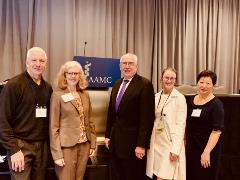
On April 4-6, 2019, AAPM&R past-president Gregory Worsowicz, MD, MBA, FAAPMR, attended the Council of Faculty and Academic Societies (CFAS) Meeting for the Association of American Medical Colleges (AAMC) in Atlanta, GA as AAPM&R’s representative. He met with multiple members of the AAMC Government Relations and Advocacy Group, advocating for the Academy’s position on the Resident Physician Shortage Reduction Act of 2019.

During the meeting, Dr. Worsowicz offered the Academy’s endorsement of the activities done by the AAMC on these issues. He also met with representatives from the Association of Academic Physiatrists (AAP) to work together in finding ways to combine efforts with the activities of the AAMC.

Dr. Worsowicz also attended the CFAS Advocacy Committee Meeting and asked the committee to explore funding outside of traditional areas which would allow residents to work in non-traditional funded areas such as Skilled Nursing Facilities (SNF) and Long-Term Acute Care (LTAC).

Through Coalition Work

The Academy’s Health Policy and Legislation Committee and Graduate Medical Education Committee worked collaboratively to sign on to a letter from the Association of American Medical Colleges (AAMC), urging Congress to support this new legislation. More than 60 other medical specialty societies signed on as well. View the letter here

How YOU Can Take Action:

Send an Email to Congress

Your Academy is calling on all physiatrists to show their support by submitting a letter to Congress on this important issue through AAPM&R’s Action Center. More than 90 people have already sent more than 300 letters on this issue and the momentum continues to grow. We created the template for you so it only takes 2 minutes to submit! Join the movement and submit your letter before April 19.

Spread the Word on Social Media

Encourage your peers to make their voices heard by spreading the word on social media. Copy and paste this message on Facebook and Twitter and tag your PM&R peers:

I advocated for the future of #physiatry by telling my senators and representatives to support the Resident Physician Shortage Act of 2019! Submit your letter here: https://bit.ly/2U6nnry #PMRAdvocates

Learn More

Learn more about how AAPM&R advocates for PM&R, including continued action to prevent physician burnout. Stay tuned to your Academy communications for more updates. For additional information, you can also explore these resources: 

Academy in Action: Resident Physician Shortage Reduction Act of 2019

Apr 16, 2019, 13:15 by User Not Found

The United States is facing a looming shortage of more than 121,000 physicians by 2030. In response, the Resident Physician Shortage Reduction Act of 2019—bipartisan legislation that would be a critical step to ensuring there are enough doctors to give patients the care they need—has been introduced in the House and the Senate. The 2 bills supporting the issue are S.348 supported by Senator Mendez (D-N.J.), Boozman (R-Ark.), and Schumer (D-N.Y.) as well as bill H.R. 1763 supported by Representative Sewell (D-AL) and Katko (R-NY).

The Resident Physician Shortage Reduction Act of 2019 will gradually and responsibly increase Medicare support for an additional 15,000 Graduate Medical Education (GME) residency positions over 5 years (3,000 slots per year). The legislation also includes a mandatory study on strategies for increasing workforce diversity in health professions. Medicare's partnership with teaching hospitals helps offset the cost of training physicians. By garnering support and co-sponsors for this bill right now, we can ensure funding for essential residencies.

How AAPM&R is Taking Action:

worso

Through Liaison Activity

On April 4-6, 2019, AAPM&R past-president Gregory Worsowicz, MD, MBA, FAAPMR, attended the Council of Faculty and Academic Societies (CFAS) Meeting for the Association of American Medical Colleges (AAMC) in Atlanta, GA as AAPM&R’s representative. He met with multiple members of the AAMC Government Relations and Advocacy Group, advocating for the Academy’s position on the Resident Physician Shortage Reduction Act of 2019.

During the meeting, Dr. Worsowicz offered the Academy’s endorsement of the activities done by the AAMC on these issues. He also met with representatives from the Association of Academic Physiatrists (AAP) to work together in finding ways to combine efforts with the activities of the AAMC.

Dr. Worsowicz also attended the CFAS Advocacy Committee Meeting and asked the committee to explore funding outside of traditional areas which would allow residents to work in non-traditional funded areas such as Skilled Nursing Facilities (SNF) and Long-Term Acute Care (LTAC).

Through Coalition Work

The Academy’s Health Policy and Legislation Committee and Graduate Medical Education Committee worked collaboratively to sign on to a letter from the Association of American Medical Colleges (AAMC), urging Congress to support this new legislation. More than 60 other medical specialty societies signed on as well. View the letter here

How YOU Can Take Action:

Send an Email to Congress

Your Academy is calling on all physiatrists to show their support by submitting a letter to Congress on this important issue through AAPM&R’s Action Center. More than 90 people have already sent more than 300 letters on this issue and the momentum continues to grow. We created the template for you so it only takes 2 minutes to submit! Join the movement and submit your letter before April 19.

Spread the Word on Social Media

Encourage your peers to make their voices heard by spreading the word on social media. Copy and paste this message on Facebook and Twitter and tag your PM&R peers:

I advocated for the future of #physiatry by telling my senators and representatives to support the Resident Physician Shortage Act of 2019! Submit your letter here: https://bit.ly/2U6nnry #PMRAdvocates

Learn More

Learn more about how AAPM&R advocates for PM&R, including continued action to prevent physician burnout. Stay tuned to your Academy communications for more updates. For additional information, you can also explore these resources: 

Explore AAPM&R

Online Learning Portal

Education is a fundamental offering that affects PM&R physicians across clinical focuses, practice areas, career stages and levels of expertise. As part of Academy membership, we provide top-notch education and other innovative learning resources across a variety of delivery mechanisms.

Access AAPM&R’s popular Online Learning Portal, which features educational resources, including case studies, instructional videos and more on a variety of clinical and practice topics.


Online Learning Portal

home-page_subscription_logo

Online Education Subscription

24/7 access to our online educational resources through the end of your annual membership cycle. Check out what's included below!

step-lockup

STEP Certificate Programs

AAPM&R’s highly-regarded STEP Certificate Programs are designed by physiatrists for physiatrists and teach and assess important physiatric skills using a progressive, competency- based curriculum.

phyzforum-omc-fnl

PhyzForum

PhyzForum is an online physiatry community that allows you to engage with peers, ask advice, and share experiences. Participate in discussions to network, collaborate, and exchange best practices with your peers.

Annual Assembly
November 12-15

12310A-1936

The 2020 Annual Assembly is virtual! Join us from November 12-15 as we meet online to share best practices and support each other as we navigate a “new normal."

Critical Conversation Series

Thursday, October 1 at 6 pm (CT)

You're invited to participate in a series of discussions on racial equity, access and inclusion in today’s world. Join us for our next conversation on October 1 for AAPM&R's Diversity and Inclusion Journey. We will review efforts that led to the creation of the D&I strategic plan, unveil our new Principles of Inclusion and Engagement and share new initiatives on the horizon.

AAPM&R News

Academy in Action: Resident Physician Shortage Reduction Act of 2019

Apr 16, 2019

The United States is facing a looming shortage of more than 121,000 physicians by 2030. In response, the Resident Physician Shortage Reduction Act of 2019—bipartisan legislation that would be a critical step to ensuring there are enough doctors to give patients the care they need—has been introduced in the House and the Senate. The 2 bills supporting the issue are S.348 supported by Senator Mendez (D-N.J.), Boozman (R-Ark.), and Schumer (D-N.Y.) as well as bill H.R. 1763 supported by Representative Sewell (D-AL) and Katko (R-NY).

The Resident Physician Shortage Reduction Act of 2019 will gradually and responsibly increase Medicare support for an additional 15,000 Graduate Medical Education (GME) residency positions over 5 years (3,000 slots per year). The legislation also includes a mandatory study on strategies for increasing workforce diversity in health professions. Medicare's partnership with teaching hospitals helps offset the cost of training physicians. By garnering support and co-sponsors for this bill right now, we can ensure funding for essential residencies.

How AAPM&R is Taking Action:

worso

Through Liaison Activity

On April 4-6, 2019, AAPM&R past-president Gregory Worsowicz, MD, MBA, FAAPMR, attended the Council of Faculty and Academic Societies (CFAS) Meeting for the Association of American Medical Colleges (AAMC) in Atlanta, GA as AAPM&R’s representative. He met with multiple members of the AAMC Government Relations and Advocacy Group, advocating for the Academy’s position on the Resident Physician Shortage Reduction Act of 2019.

During the meeting, Dr. Worsowicz offered the Academy’s endorsement of the activities done by the AAMC on these issues. He also met with representatives from the Association of Academic Physiatrists (AAP) to work together in finding ways to combine efforts with the activities of the AAMC.

Dr. Worsowicz also attended the CFAS Advocacy Committee Meeting and asked the committee to explore funding outside of traditional areas which would allow residents to work in non-traditional funded areas such as Skilled Nursing Facilities (SNF) and Long-Term Acute Care (LTAC).

Through Coalition Work

The Academy’s Health Policy and Legislation Committee and Graduate Medical Education Committee worked collaboratively to sign on to a letter from the Association of American Medical Colleges (AAMC), urging Congress to support this new legislation. More than 60 other medical specialty societies signed on as well. View the letter here

How YOU Can Take Action:

Send an Email to Congress

Your Academy is calling on all physiatrists to show their support by submitting a letter to Congress on this important issue through AAPM&R’s Action Center. More than 90 people have already sent more than 300 letters on this issue and the momentum continues to grow. We created the template for you so it only takes 2 minutes to submit! Join the movement and submit your letter before April 19.

Spread the Word on Social Media

Encourage your peers to make their voices heard by spreading the word on social media. Copy and paste this message on Facebook and Twitter and tag your PM&R peers:

I advocated for the future of #physiatry by telling my senators and representatives to support the Resident Physician Shortage Act of 2019! Submit your letter here: https://bit.ly/2U6nnry #PMRAdvocates

Learn More

Learn more about how AAPM&R advocates for PM&R, including continued action to prevent physician burnout. Stay tuned to your Academy communications for more updates. For additional information, you can also explore these resources: 

Physiatry News

Academy in Action: Resident Physician Shortage Reduction Act of 2019

Apr 16, 2019

The United States is facing a looming shortage of more than 121,000 physicians by 2030. In response, the Resident Physician Shortage Reduction Act of 2019—bipartisan legislation that would be a critical step to ensuring there are enough doctors to give patients the care they need—has been introduced in the House and the Senate. The 2 bills supporting the issue are S.348 supported by Senator Mendez (D-N.J.), Boozman (R-Ark.), and Schumer (D-N.Y.) as well as bill H.R. 1763 supported by Representative Sewell (D-AL) and Katko (R-NY).

The Resident Physician Shortage Reduction Act of 2019 will gradually and responsibly increase Medicare support for an additional 15,000 Graduate Medical Education (GME) residency positions over 5 years (3,000 slots per year). The legislation also includes a mandatory study on strategies for increasing workforce diversity in health professions. Medicare's partnership with teaching hospitals helps offset the cost of training physicians. By garnering support and co-sponsors for this bill right now, we can ensure funding for essential residencies.

How AAPM&R is Taking Action:

worso

Through Liaison Activity

On April 4-6, 2019, AAPM&R past-president Gregory Worsowicz, MD, MBA, FAAPMR, attended the Council of Faculty and Academic Societies (CFAS) Meeting for the Association of American Medical Colleges (AAMC) in Atlanta, GA as AAPM&R’s representative. He met with multiple members of the AAMC Government Relations and Advocacy Group, advocating for the Academy’s position on the Resident Physician Shortage Reduction Act of 2019.

During the meeting, Dr. Worsowicz offered the Academy’s endorsement of the activities done by the AAMC on these issues. He also met with representatives from the Association of Academic Physiatrists (AAP) to work together in finding ways to combine efforts with the activities of the AAMC.

Dr. Worsowicz also attended the CFAS Advocacy Committee Meeting and asked the committee to explore funding outside of traditional areas which would allow residents to work in non-traditional funded areas such as Skilled Nursing Facilities (SNF) and Long-Term Acute Care (LTAC).

Through Coalition Work

The Academy’s Health Policy and Legislation Committee and Graduate Medical Education Committee worked collaboratively to sign on to a letter from the Association of American Medical Colleges (AAMC), urging Congress to support this new legislation. More than 60 other medical specialty societies signed on as well. View the letter here

How YOU Can Take Action:

Send an Email to Congress

Your Academy is calling on all physiatrists to show their support by submitting a letter to Congress on this important issue through AAPM&R’s Action Center. More than 90 people have already sent more than 300 letters on this issue and the momentum continues to grow. We created the template for you so it only takes 2 minutes to submit! Join the movement and submit your letter before April 19.

Spread the Word on Social Media

Encourage your peers to make their voices heard by spreading the word on social media. Copy and paste this message on Facebook and Twitter and tag your PM&R peers:

I advocated for the future of #physiatry by telling my senators and representatives to support the Resident Physician Shortage Act of 2019! Submit your letter here: https://bit.ly/2U6nnry #PMRAdvocates

Learn More

Learn more about how AAPM&R advocates for PM&R, including continued action to prevent physician burnout. Stay tuned to your Academy communications for more updates. For additional information, you can also explore these resources: 

Take the Next STEP in Your Ultrasound Education

step

AAPM&R's STEP Ultrasound Certificate Program is the premiere ultrasound training program—designed by physiatrists, for physiatrists. 

As the only formal, standardized training pathway available for honing and validating your ultrasound skill set, successful completion of the STEP Ultrasound Program will clearly demonstrate to your patients, fellow health care professionals, employers, and the medical facilities you work with that you are a competent professional, expertly trained in ultrasound. 

PhyzForum AAPM&R's Online Member Community