The American Academy of Physical Medicine and Rehabilitation (AAPM&R) invites you to submit your clinical and basic science research findings to be considered for inclusion in the 2026 Annual Assembly, being held November 11-14 in Orlando, FL, and virtual.
Call for Late-Breaking Original Research Abstracts:
May 20 - June 24
Original Research that was still in progress during the original submission deadline can be submitted through the summer Call for Late-Breaking Abstracts submission process. Only a limited number of abstracts can be accepted as late breaking. The Late-Breaking submission window will run: May 20- June 24.
Please Note: Case Reports will not be considered for Late-Breaking Abstracts.
Submission Guidelines
- All submission material must be submitted online by Wednesday, June 24, at 11:59 pm (ET). This includes all author and co-author disclosure forms. It is strongly encouraged that you start your submission and add your co-authors early in the process, allowing them time to complete their forms before the deadline.
- Only the submitting/corresponding author of the abstract will receive email notification of acceptance or rejection. It is the responsibility of the corresponding author to notify the co-authors of acceptance or rejection. Notifications will be sent via email in June 2026.
- The presenting authors (poster presenter) must register for the Annual Assembly to present their poster. No reimbursement or honoraria will be given for abstract or poster presentations.
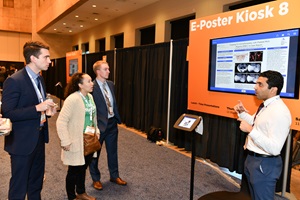
- All posters will be displayed in an electronic format.
- The Review Committee reserves the right to assign presentation times to suit program needs. Posters will be displayed by category. Presenters will not be able to change the day of the presentation.
- Accepted original research abstracts may be minimally edited for style and format and published in conjunction with PM&R, the Academy’s scientific journal. A maximum of 10 authors' names will be included per abstract. The abstract will be available in electronic format in conjunction with PM&R. Accepted case reports will be published in the conference app and website.
- When preparing an abstract, authors are requested to abide by the following guidelines.
- Authors must identify in the title if the abstract is a case report. Example: Gymnast With Carpal Tunnel Syndrome: A Case Report
- Authors may not submit abstracts written in all CAPS.
- Authors must spell, in full, on first introduction of all acronyms or abbreviations used.
- All numbers should be presented in Arabic numeral form, including numbers from 1 to 10.
- Authors may not add new or alter existing subject headings. See the Structured Abstract headings in the examples below.
- Authors may not use tables, graphs, or figures in the abstract submission process.
- Authors may not list references in the abstract, but may include them on their poster or slides.
- Authors must report the level of evidence of research studies. Case report submissions will select “Case Report”; research abstract submitter will need to select a level of evidence from Level I‒V.
| Level |
Type of evidence |
| I |
High quality prospective cohort study with adequate power or systematic review of these studies |
| II |
Lesser quality prospective cohort, retrospective cohort study, untreated controls from an RCT, or systematic review of these studies |
| III |
Case-control study or systematic review of these studies |
| IV |
Case series |
| V |
Expert opinion; case report or clinical example; or evidence based on physiology, bench research or “first principles” |
- Authors may not add an introductory passage to precede the Objective. These remarks are more appropriate at presentation.
- Authors must not submit abstracts that constitute promotion of a product or service. (See “Commercialism and Disclosure Statements” below.)
- If you refer to brand-name drugs, the generic name must be provided.
- We request that non-fluent English speakers have their abstracts edited prior to submission by a proficient English speaker.
Submission Types
An Original Research Abstract communicates a brief summary of a research question, methods, results, and conclusions of a research study or experiment conducted by the author(s).
Categories
Submitters must choose the appropriate theme/category for each abstract. Submission categories include:
- General Rehabilitation
- Musculoskeletal and Sports Medicine
- Neurological Rehabilitation
- Pain and Spine Medicine
- Pediatric Rehabilitation
- Practice Management and Leadership*
- Quality Improvement** (Original Research only)
* Health Economics and Outcomes Research (HEOR) abstracts should be submitted under the theme/category, Practice Management and Leadership.
** Accepted original research abstracts within the quality improvement category may be eligible to receive Quality Improvement (QI) credit that can be applied to the Continuing Certification (CC) Program. The QI component of ABPMR’s CC Program is simple documentation of incremental improvements being implemented into your practice or processes on a continuous basis. To be considered for QI credit, the QI project abstract must:
- Follow the Plan-Do-Study-Act (PDSA) methodology that involves identifying a problem, taking a baseline measurement, setting a goal, making a change, and measuring again to determine if you met the intended outcome.
- Have been implemented within the last five (5) years.
Please note, QI credit cannot be banked for active ABPMR Diplomates, this credit will be applied to your current continuing certification cycle. Residents can bank a total of one QI credit prior to starting their first cycle of the ABPMR Continuing Certification (CC) Program. Once abstracts are selected to the Annual Assembly program, the primary author will be sent information on how to opt in to be considered for this credit.
Submission Acceptance Tiers
Original Research and Case Reports will be reviewed and accepted into the following tiers.
Original Research
- Tier A: Accepted as a Scientific Session, author has the opportunity to meet with Journal Editor-in-Chief and/or Deputy Editor, and published in the Journal, conference app, and website.
To be accepted into Tier A, the abstract must provide a robust background and/or objectives of the research. The abstract clearly describes the research strategy/design and the results/findings of the research. The abstract clearly describes the conclusions, outcomes, and impact of the research. No grammatical errors. Authors accepted into this tier will be invited to present their work in 5-7 PowerPoint slides (~7-minute presentation) in a Session Room with other authors accepted into this Tier. This is a live and in person event, and you will be assigned a specific date and time.
- Tier B: Accepted as a podium presentation in the Research Hub/Exhibit Hall and published in the Journal, conference app, and website. To be accepted into Tier B, the abstract must provide a background and/or objectives of the research. The abstract describes the research strategy/design and the results/findings of the research. The abstract describes the conclusions, outcomes, and impact of the research. Limited grammatical errors. Authors accepted into this tier will be invited to present their work in 5-7 PowerPoint slides (~7-minute presentation) at one of the Research Hub Theaters located in the Exhibit hall with other authors accepted into this Tier. This is a live and in person event, and you will be assigned a specific date and time.
- Tier C: Accepted as a kiosk presentation within the Research Hub/Exhibit Hall and published in the conference app and website. To be accepted into Tier C, the abstract must provide limited background and/or objectives of the research. The abstract narrowly describes the research strategy/decision and the results/findings of the research. The abstract vaguely describes the conclusions, outcomes, and impact of the research. Limited grammatical errors. Authors accepted into this tier will be invited to present their 1-page poster (~7-minute presentation) at one of the Research Hub kiosks located in the Exhibit hall with other authors accepted into this Tier. This is a live and in person event, and you will be assigned a specific date and time.
Case Reports
- Tier A: Accepted a podium theater presentation within the Research Hub/Exhibit Hall and published in the conference app and website. To be accepted into Tier A, the abstract must provide a robust description of the research. The abstract clearly describes the setting and the assessment/results of the research. The abstract clearly describes the discussion, conclusion, and diagnosis of the research. No grammatical errors. Authors accepted into this tier will be invited to present their work in 5-7 PowerPoint slides (~7-minute presentation) at one of the Research Hub Theaters located in the Exhibit hall with other authors accepted into this Tier. This is a live and in person event, and you will be assigned a specific date and time.
- Tier B: Accepted as a kiosk presentation within the Research Hub/Exhibit Hall and published in the conference app and website. To be accepted into Tier B, the abstract must provide a description of the research. The abstract describes the setting and the assessment/results of the research. The abstract describes the discussion, conclusion, and diagnosis of the research. Limited grammatical errors. Authors accepted into this tier will be invited to present their 1-page poster (~7-minute presentation) at one of the Research Hub kiosks located in the Exhibit Hall with other authors accepted into this Tier. This is a live and in person event, and you will be assigned a specific date and time.
- Tier C: Accepted as a virtual poster and published in the conference app and website.
To be accepted into Tier C, the abstract must provide limited description of the research. The abstract narrowly describes the setting and the assessment/results of the research. The abstract vaguely describes the discussion, conclusion, and diagnosis of the research. Limited grammatical errors. Authors accepted into this tier are welcome to present their 1-page poster at one of the Research Hub kiosks located in the Exhibit Hall during listed “Open Kiosk” hours.
Presenters whose posters were accepted will be notified of their Tier in June 2026.
Encore Presentations
Encore Presentations AAPM&R continues to emphasize original research and prefers the Annual Assembly be the forum for initial presentation. AAPM&R will not accept abstracts that have been previously presented at other medical, scientific, and research meetings. If there is a similar resubmission, it will be evaluated on content criteria relevant to the educational and scientific objectives of the Annual Assembly.
Required Abstract Fields and Format
- Research abstracts must include the following:
- Level of Evidence
- Background and/or Objectives
- Design
- Setting (Do not list formal institution name)
- Participants
- Interventions (If your study does not contain any interventions, then insert: “Interventions: not applicable.”)
- Main Outcome Measures
- Results
- Conclusions
- Abstracts submitted as a case report must include the following:
- Case Diagnosis
- Case Description OR Program Description (Do not list formal institution name)
- Setting
- Assessment/Results
- Discussion (relevance)
- Conclusions
- Abstracts are to be no more than 300 words (not including title or author block).
- Independent peer reviewers will evaluate each abstract based on the components of the structured abstract.
Click Here to View Sample Abstracts
Commercialism and Disclosure Statements
- Presentations that constitute promotion or advertising will be rejected. Pervasive or inappropriate use of commercial/trade names is not allowed. Generic names create a sense of impartiality that are the accepted standard of practice in submitting scientific abstracts and are strongly encouraged. No advertising matter of any description may be distributed, nor may any material be displayed that directly promotes the commercial interest of any particular company, enterprise or the author(s).
- Presenters must disclose any relevant financial interest in relationship with or support from manufacturers of any commercial product(s). AAPM&R will determine if there is a conflict of interest and will take all appropriate steps to resolve.
- Presenters must disclose the US Food and Drug Administration (FDA) clearance status of medical devices and pharmaceuticals for the uses discussed or described in the presentation. "Off label" uses of a device or pharmaceutical may be described in the presentation as long as the lack of FDA clearance for this is also disclosed.
- Statements made in presentations are the sole responsibility of the author(s). Statements should not be viewed as, or representative of, any formal stance or position taken on any product, subject or issue by the Academy or Elsevier.
- To be considered for any AMA PRA Category 1 Credit™-designated activities at the Annual Assembly (i.e., Research Spotlight Presentations), presenting authors must be medical professionals, MD or MD-equivalent, who are not employed by a pharmaceutical or device manufacturing company.
- If presenters intend to reference brand-name drugs, the generic name must be provided.
Late-Breaking Original Research Abstracts
Original Research that is still in progress during the original submission deadline can be submitted through the summer Call for Late-Breaking Abstracts submission process. Only a limited number of abstracts can be accepted as late breaking. The opening date has not been determined and will be updated by Summer 2025. Please Note: Case Reports will not be considered for Late-Breaking Abstracts.
Frequently Asked Questions
If a poster is accepted, do poster presenters have to be present for #AAPMR26 in-person in or can they present virtually?
All accepted poster presenters will be expected to register for the Annual Assembly either live or virtual. We anticipate that there will be options to present live on site or to pre-record an audio presentation to go with the accepted posters. Authors will receive more details with their decision letters.
Do we accept Trials in Progress (i.e., abstracts that contain no data)?
Trials in Progress are not eligible for consideration. Data and/or results are important for reviewers to be able to review.
Do we accept Review Articles or Literature Reviews?
Review Articles are not eligible for consideration.
Questions regarding abstract submissions? Email abstracts@aapmr.org.