Payment Reform

Advocacy

Did you find what you're looking for?

If not, email us at healthpolicy@aapmr.org.

(Advertisement)

AAPM&R remains committed to pursuing fair reimbursement for physician-led care in the ever-changing health care environment. By educating all types of medical payers on the value of health and function, the Academy is helping establish our members as a critical piece of the new value-driven health care delivery landscape. The Academy is particularly concerned with the annual decreases to Medicare payment, which threaten the livelihood of our members. AAPM&R’s payment reform priorities include:

  • Partnering with a broad range of medical specialties to encourage Congress and Medicare to pursue payment reform, which would ensure Medicare payments keep up with inflation rates and the costs of operating a medical practice.
  • Taking an active role in the process that develops and modifies codes and their value through the Academy’s work with the American Medical Association RVS Update Committee (RUC) and Current Procedural Terminology (CPT) Panel meetings.
  • Focusing on reimbursement issues that have substantial impacts to physiatry.
  • Making proactive strides to affirm the value of physiatric practice by showing the necessity of the cost-saving care our physicians provide

AAPM&R is taking action.

Federal and State Advocacy Actions in 2025:

  • Your Academy joined the Multi- Society Pain Workgroup in submitting comments to Carelon Medical Benefits Management supporting coverage of spinal cord stimulation.
  • Your Academy joined a specialty coalition letter urging Senate leadership to make improvements to physician payment, protect access to federal student loans and prevent Medicaid coverage losses in the Senate’s reconciliation bill language.
  • Your Academy submitted comments to the Centers for Medicare & Medicaid Services (CMS) in response to the Skilled Nursing Facility (SNF) and Inpatient Rehabilitation Facility (IRF) Prospective Payment System proposed rules for fiscal year 2026.
  • Your Academy joined a coalition of specialty societies in issuing a statement expressing disappointment that Congress has not yet prioritized providing Medicare payment relief for physicians and expressing strong support for Congress to take immediate action to provide payment relief for physicians in 2025 and beyond.
  • Michelle Poliak-Tunis, MD, FAAPMR, and Marzena Buzanowska, MD, FAAPMR, represented AAPM&R at the February 3 Multi-Jurisdictional Carrier Advisory Committee meeting on Peripheral Nerve Blocks and Ablations. The information they provided, along with expertise from other participants, will be considered in policy changes by several Medicare Administrative Contractors.
  • Your Academy joined a coalition letter to Congress led by the American Medical Association expressing strong support for Congress to take immediate action to fix physician payment under the Medicare program.
  • Your Academy joined several other medical specialty societies in sending a letter to Congress urging prioritization of physician payment relief. The letter asked for swift passage of H.R. 879, Academy-endorsed legislation that would both reverse the 2025 cut and provide a year-long boost to physician payment under the Medicare program.


Major Win - Medicare Payment Advisory Commission (MedPAC) Abandons Efforts to Implement IRF/SNF Site-Neutral Payment

After years of advocacy by AAPM&R and its physician volunteers, the Medicare Payment Advisory Commission (MedPAC) announced in its June 2024 report to Congress that it is halting its work on developing a recommendation for site-neutral payment policies for care provided in the Inpatient Rehabilitation Facility (IRF) setting. This represents a major victory for both providers and patients in the IRF setting and comes after intense, sustained advocacy from AAPM&R and other stakeholders.  

In its report to Congress, MedPAC acknowledges that comparing patients treated in IRFs and SNFs and their outcomes was significantly more challenging than expected. For background, MedPAC is an independent legislative branch agency established by Congress in 1997 to advise on issues affecting the Medicare program, including payment systems. On September 7, 2016, former AAPM&R President, Greg Worsowicz, MD testified at the U.S. House of Representatives Ways and Means Committee's Health Subcommittee hearing on Incentivizing Quality Outcomes in Medicare Part A. His testimony placed an emphasis on improving the quality and efficiency of patient care through payment reform measures and value-based purchasing in the post-acute care (PAC) sector.

Over the years, the Academy worked to ensure that physiatry’s voice was taken into account during MedPAC’s ongoing deliberations on this issue and collaborated with other stakeholder organizations to advocate against site-neutral payment proposals and the development of a Unified Post Acute Care Prospective Payment System. These efforts included submitting and co-signing numerous comment letters, participating in multiple Technical Expert Panels (TEPs), meeting with Congressional offices and MedPAC staff, testifying before the U.S. Congress, and creating Principles for a Medicare Unified Post-Acute Care Payment System to advocate for prioritizing patient needs.  
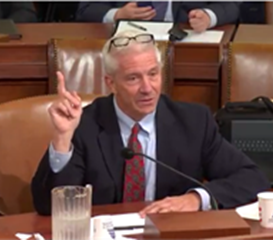
On September 7, 2016, former AAPM&R President, Greg Worsowicz, MD testified at the U.S. House of Representatives Ways and Means Committee's Health Subcommittee hearing on Incentivizing Quality Outcomes in Medicare Part A. His testimony placed an emphasis on improving the quality and efficiency of patient care through payment reform measures and value-based purchasing in the post-acute care (PAC) sector.

Resources


G2211 Add-On Code

Effective January 1, 2024 the Centers for Medicare and Medicaid Services implemented payment for G2211, a HCPCS add-on code to be billed in conjunction with an office/outpatient evaluation and management (E/M) code in certain instances. Learn more about how to use this resource and applications for physiatry.