Supporting the Physiatrist, Strengthening the Specialty

AAPM&R is working to ensure PM&R is positioned to thrive in the future of healthcare and that you’re prepared for wherever your career takes you. Our more than 10,000 Academy members support each other in advancing PM&R’s impact through healthcare. As we move forward, it is more important than ever that every member play an active role in helping one another realize the vision for our specialty.

Newsroom

Looking for AAPM&R members in the news? Press releases? Our Academy Action Center? Or looking to submit your members in the news content? You'll find it all in our Newsroom. You will also be able to explore PM&R and Academy news as well as learn how to contact us if you would like to submit your member content, or if you are a reporter who is interested in speaking with a PM&R physician.

Event Calendar and Webinars

Stay up to date on all Academy events and learning opportunities and view recordings of past webinars. 

PM&R Aspire

PM&R Aspire is our career-exploration platform purpose-built to help PM&R professionals make better-informed career decisions. We have mapped employer locations across the United States, enabling you to explore, message and apply to the roles that matter most to you.

PM&R Q&A Video Conversations

AAPM&R is leading the advancement of physiatry’s impact throughout healthcare as aligned with YOUR vision for the specialty. Explore our Q&A video series where members of our Physiatrist in Training (PHiT) Council Board chat with AAPM&R Board leaders.

Latest News

Sponsored: Improving Function and Pain Symptoms in the Lumbar Spine with Bracing

Sep 25, 2017, 13:22 by User Not Found

Lumbar spine pathology can affect a diverse patient population; from the young athlete, to the working adult, to the elderly patient suffering from degeneration. An initial course of non-operative treatment could include use of analgesics and NSAIDs to control pain, epidural injections, and physical methods such as bracing and flexion strengthening exercises1. However, this treatment course could be prescribed by a number of medical health care professionals. To be relevant in the Physiatry world, non-surgical treatment options need to exhibit an opportunity to improve patient function–either by reducing limiting symptoms or assisting in mobility–allowing an active return to work, sport, or daily living.

How is Physical Medicine & Rehabilitation (PM&R) Different?

Aside from a focus on non-operative treatment, one of the unique practice patterns of PM&R that helps separate Physiatry from other fields of medicine is the education and background in bracing and orthoses. In the case of lumbar spine pathology, bracing may be a key tool for improving function and reducing pain for athletes and all patients.

NASS Guidelines - Improved Function and Pain Symptoms

Referencing multiple studies, North American Spine Society (NASS) Clinical Guidelines suggest that the use of a lumbosacral corset has been shown to improve function (a significant increase in walking distance or time) and decrease pain in patients with lumbar spinal stenosis (LSS)2. In athletes, bracing has been suggested to help control pain for those with lumbar conditions including Scheuermann’s disease, scoliosis and spondylolisthesis, especially if the athlete’s symptoms have not improved with rest and activity modification3.

Furthermore, studies evaluating the influence of bracing, exercises and education found that brace treatments (done in combination with exercises) were not shown to reduce patient range-of-motion or lessen trunk strength4. In fact, non-conservative approaches are likely associated with higher risks, reported by a 2016 Cochrane Review that reiterated the high rates of side effects and complications associated with LSS surgery5.
Ossur AdSetting the (Bracing) Bar Higher

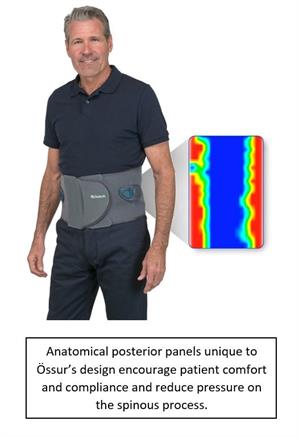
One of the newest lumbar-sacral orthoses on the market, launched by Össur on September 5th 2017, has been supported by pressure mapping data. The data demonstrated that the unique, anatomically-contoured panels of the Miami LSO™ reduce pressure on the spinous process while applying even compression on the para-spinal musculature to encourage patient comfort and compliance.

Aside from innovating clinically-indicated products, Össur’s strength is in providing business and reimbursement solutions to help practitioners develop profitable businesses. Signing up for their free Reimbursement Blog provides access to webinars, billing support, and a guide to billing for spinal orthosis under Medicare.

Lumbar Bracing and Injections

More Physiatrists are utilizing injections as an alternative to opioids and other pain medications for treatment of lumbar spine pathology symptoms. Although no randomized-controlled trials were found showing the efficacy of lumbar bracing in combination with injection treatments, similar protocols exist for other joints including the hip, knee and ankle. With positive clinical and anecdotal data for both treatments, the combination of injections and lumbar bracing could provide a solid platform for conservative rehabilitation of the pathological lumbar spine patient.

To learn more or request a product demonstration, visit www.ossur.com/miami-lso

References:

  1. Kalichman L & Hunter, DJ. Diagnosis and conservative management of degenerative lumbar spondylolisthesis.  European Spine Journal. 2008;17(3): 327–333
  2. North American Spine Society. Evidence-based Clinical Guidelines for Multidisciplinary Spine care: Diagnosis and Treatment of Degenerative Lumbar Spinal Stenosis. 2011: 51-54. Retrieved from https://www.spine.org/Documents/ResearchClinicalCare/Guidelines/LumbarStenosis.pdf
  3. Baker, RJ & Patel, D. Lower Back Pain in the Athlete: Common Conditions and Treatment. Prim Care Clinical Office Practice. 2005;32: 201–229
  4. Spratt KF, Weinstein JN, Lehmann TR, Woody J, Sayre H. Efficacy of flexion and extension treatments incorporating braces for low-back pain patients with retrodisplacement, spondylolisthesis, or normal sagittal translation. Spine. 1993;18:1839–1849
  5. Zaina F, Tomkins-Lane C, Carragee E, Negrini S. Surgical versus non-surgical treatment for lumbar spinal stenosis. Cochrane Database of Systematic Reviews. 2016;1 DOI: 10.1002/14651858.CD010264.pub2.
  6. Data on file at Össur


Sponsored: Improving Function and Pain Symptoms in the Lumbar Spine with Bracing

Sep 25, 2017, 13:22 by User Not Found

Lumbar spine pathology can affect a diverse patient population; from the young athlete, to the working adult, to the elderly patient suffering from degeneration. An initial course of non-operative treatment could include use of analgesics and NSAIDs to control pain, epidural injections, and physical methods such as bracing and flexion strengthening exercises1. However, this treatment course could be prescribed by a number of medical health care professionals. To be relevant in the Physiatry world, non-surgical treatment options need to exhibit an opportunity to improve patient function–either by reducing limiting symptoms or assisting in mobility–allowing an active return to work, sport, or daily living.

How is Physical Medicine & Rehabilitation (PM&R) Different?

Aside from a focus on non-operative treatment, one of the unique practice patterns of PM&R that helps separate Physiatry from other fields of medicine is the education and background in bracing and orthoses. In the case of lumbar spine pathology, bracing may be a key tool for improving function and reducing pain for athletes and all patients.

NASS Guidelines - Improved Function and Pain Symptoms

Referencing multiple studies, North American Spine Society (NASS) Clinical Guidelines suggest that the use of a lumbosacral corset has been shown to improve function (a significant increase in walking distance or time) and decrease pain in patients with lumbar spinal stenosis (LSS)2. In athletes, bracing has been suggested to help control pain for those with lumbar conditions including Scheuermann’s disease, scoliosis and spondylolisthesis, especially if the athlete’s symptoms have not improved with rest and activity modification3.

Furthermore, studies evaluating the influence of bracing, exercises and education found that brace treatments (done in combination with exercises) were not shown to reduce patient range-of-motion or lessen trunk strength4. In fact, non-conservative approaches are likely associated with higher risks, reported by a 2016 Cochrane Review that reiterated the high rates of side effects and complications associated with LSS surgery5.

Ossur AdSetting the (Bracing) Bar Higher

One of the newest lumbar-sacral orthoses on the market, launched by Össur on September 5th 2017, has been supported by pressure mapping data. The data demonstrated that the unique, anatomically-contoured panels of the Miami LSO™ reduce pressure on the spinous process while applying even compression on the para-spinal musculature to encourage patient comfort and compliance.

Aside from innovating clinically-indicated products, Össur’s strength is in providing business and reimbursement solutions to help practitioners develop profitable businesses. Signing up for their free Reimbursement Blog provides access to webinars, billing support, and a guide to billing for spinal orthosis under Medicare.

Lumbar Bracing and Injections

More Physiatrists are utilizing injections as an alternative to opioids and other pain medications for treatment of lumbar spine pathology symptoms. Although no randomized-controlled trials were found showing the efficacy of lumbar bracing in combination with injection treatments, similar protocols exist for other joints including the hip, knee and ankle. With positive clinical and anecdotal data for both treatments, the combination of injections and lumbar bracing could provide a solid platform for conservative rehabilitation of the pathological lumbar spine patient.

To learn more or request a product demonstration, visit www.ossur.com/miami-lso

References:

  1. Kalichman L & Hunter, DJ. Diagnosis and conservative management of degenerative lumbar spondylolisthesis.  European Spine Journal. 2008;17(3): 327–333
  2. North American Spine Society. Evidence-based Clinical Guidelines for Multidisciplinary Spine care: Diagnosis and Treatment of Degenerative Lumbar Spinal Stenosis. 2011: 51-54. Retrieved from https://www.spine.org/Documents/ResearchClinicalCare/Guidelines/LumbarStenosis.pdf
  3. Baker, RJ & Patel, D. Lower Back Pain in the Athlete: Common Conditions and Treatment. Prim Care Clinical Office Practice. 2005;32: 201–229
  4. Spratt KF, Weinstein JN, Lehmann TR, Woody J, Sayre H. Efficacy of flexion and extension treatments incorporating braces for low-back pain patients with retrodisplacement, spondylolisthesis, or normal sagittal translation. Spine. 1993;18:1839–1849
  5. Zaina F, Tomkins-Lane C, Carragee E, Negrini S. Surgical versus non-surgical treatment for lumbar spinal stenosis. Cochrane Database of Systematic Reviews. 2016;1 DOI: 10.1002/14651858.CD010264.pub2.
  6. Data on file at Össur


Explore AAPM&R

Online Learning Portal

Education is a fundamental offering that affects PM&R physicians across clinical focuses, practice areas, career stages and levels of expertise. As part of Academy membership, we provide top-notch education and other innovative learning resources across a variety of delivery mechanisms.

Access AAPM&R’s popular Online Learning Portal, which features educational resources, including case studies, instructional videos and more on a variety of clinical and practice topics.


Online Learning Portal

home-page_subscription_logo

Online Education Subscription

24/7 access to our online educational resources through the end of your annual membership cycle. Check out what's included below!

step-lockup

STEP Certificate Programs

AAPM&R’s highly-regarded STEP Certificate Programs are designed by physiatrists for physiatrists and teach and assess important physiatric skills using a progressive, competency- based curriculum.

phyzforum-omc-fnl

PhyzForum

PhyzForum is an online physiatry community that allows you to engage with peers, ask advice, and share experiences. Participate in discussions to network, collaborate, and exchange best practices with your peers.

Annual Assembly
November 12-15

12310A-1936

The 2020 Annual Assembly is virtual! Join us from November 12-15 as we meet online to share best practices and support each other as we navigate a “new normal."

Critical Conversation Series

Thursday, October 1 at 6 pm (CT)

You're invited to participate in a series of discussions on racial equity, access and inclusion in today’s world. Join us for our next conversation on October 1 for AAPM&R's Diversity and Inclusion Journey. We will review efforts that led to the creation of the D&I strategic plan, unveil our new Principles of Inclusion and Engagement and share new initiatives on the horizon.

AAPM&R News

Sponsored: Improving Function and Pain Symptoms in the Lumbar Spine with Bracing

Sep 25, 2017

Lumbar spine pathology can affect a diverse patient population; from the young athlete, to the working adult, to the elderly patient suffering from degeneration. An initial course of non-operative treatment could include use of analgesics and NSAIDs to control pain, epidural injections, and physical methods such as bracing and flexion strengthening exercises1. However, this treatment course could be prescribed by a number of medical health care professionals. To be relevant in the Physiatry world, non-surgical treatment options need to exhibit an opportunity to improve patient function–either by reducing limiting symptoms or assisting in mobility–allowing an active return to work, sport, or daily living.

How is Physical Medicine & Rehabilitation (PM&R) Different?

Aside from a focus on non-operative treatment, one of the unique practice patterns of PM&R that helps separate Physiatry from other fields of medicine is the education and background in bracing and orthoses. In the case of lumbar spine pathology, bracing may be a key tool for improving function and reducing pain for athletes and all patients.

NASS Guidelines - Improved Function and Pain Symptoms

Referencing multiple studies, North American Spine Society (NASS) Clinical Guidelines suggest that the use of a lumbosacral corset has been shown to improve function (a significant increase in walking distance or time) and decrease pain in patients with lumbar spinal stenosis (LSS)2. In athletes, bracing has been suggested to help control pain for those with lumbar conditions including Scheuermann’s disease, scoliosis and spondylolisthesis, especially if the athlete’s symptoms have not improved with rest and activity modification3.

Furthermore, studies evaluating the influence of bracing, exercises and education found that brace treatments (done in combination with exercises) were not shown to reduce patient range-of-motion or lessen trunk strength4. In fact, non-conservative approaches are likely associated with higher risks, reported by a 2016 Cochrane Review that reiterated the high rates of side effects and complications associated with LSS surgery5.

Ossur AdSetting the (Bracing) Bar Higher

One of the newest lumbar-sacral orthoses on the market, launched by Össur on September 5th 2017, has been supported by pressure mapping data. The data demonstrated that the unique, anatomically-contoured panels of the Miami LSO™ reduce pressure on the spinous process while applying even compression on the para-spinal musculature to encourage patient comfort and compliance.

Aside from innovating clinically-indicated products, Össur’s strength is in providing business and reimbursement solutions to help practitioners develop profitable businesses. Signing up for their free Reimbursement Blog provides access to webinars, billing support, and a guide to billing for spinal orthosis under Medicare.

Lumbar Bracing and Injections

More Physiatrists are utilizing injections as an alternative to opioids and other pain medications for treatment of lumbar spine pathology symptoms. Although no randomized-controlled trials were found showing the efficacy of lumbar bracing in combination with injection treatments, similar protocols exist for other joints including the hip, knee and ankle. With positive clinical and anecdotal data for both treatments, the combination of injections and lumbar bracing could provide a solid platform for conservative rehabilitation of the pathological lumbar spine patient.

To learn more or request a product demonstration, visit www.ossur.com/miami-lso

References:

  1. Kalichman L & Hunter, DJ. Diagnosis and conservative management of degenerative lumbar spondylolisthesis.  European Spine Journal. 2008;17(3): 327–333
  2. North American Spine Society. Evidence-based Clinical Guidelines for Multidisciplinary Spine care: Diagnosis and Treatment of Degenerative Lumbar Spinal Stenosis. 2011: 51-54. Retrieved from https://www.spine.org/Documents/ResearchClinicalCare/Guidelines/LumbarStenosis.pdf
  3. Baker, RJ & Patel, D. Lower Back Pain in the Athlete: Common Conditions and Treatment. Prim Care Clinical Office Practice. 2005;32: 201–229
  4. Spratt KF, Weinstein JN, Lehmann TR, Woody J, Sayre H. Efficacy of flexion and extension treatments incorporating braces for low-back pain patients with retrodisplacement, spondylolisthesis, or normal sagittal translation. Spine. 1993;18:1839–1849
  5. Zaina F, Tomkins-Lane C, Carragee E, Negrini S. Surgical versus non-surgical treatment for lumbar spinal stenosis. Cochrane Database of Systematic Reviews. 2016;1 DOI: 10.1002/14651858.CD010264.pub2.
  6. Data on file at Össur


Physiatry News

Sponsored: Improving Function and Pain Symptoms in the Lumbar Spine with Bracing

Sep 25, 2017

Lumbar spine pathology can affect a diverse patient population; from the young athlete, to the working adult, to the elderly patient suffering from degeneration. An initial course of non-operative treatment could include use of analgesics and NSAIDs to control pain, epidural injections, and physical methods such as bracing and flexion strengthening exercises1. However, this treatment course could be prescribed by a number of medical health care professionals. To be relevant in the Physiatry world, non-surgical treatment options need to exhibit an opportunity to improve patient function–either by reducing limiting symptoms or assisting in mobility–allowing an active return to work, sport, or daily living.

How is Physical Medicine & Rehabilitation (PM&R) Different?

Aside from a focus on non-operative treatment, one of the unique practice patterns of PM&R that helps separate Physiatry from other fields of medicine is the education and background in bracing and orthoses. In the case of lumbar spine pathology, bracing may be a key tool for improving function and reducing pain for athletes and all patients.

NASS Guidelines - Improved Function and Pain Symptoms

Referencing multiple studies, North American Spine Society (NASS) Clinical Guidelines suggest that the use of a lumbosacral corset has been shown to improve function (a significant increase in walking distance or time) and decrease pain in patients with lumbar spinal stenosis (LSS)2. In athletes, bracing has been suggested to help control pain for those with lumbar conditions including Scheuermann’s disease, scoliosis and spondylolisthesis, especially if the athlete’s symptoms have not improved with rest and activity modification3.

Furthermore, studies evaluating the influence of bracing, exercises and education found that brace treatments (done in combination with exercises) were not shown to reduce patient range-of-motion or lessen trunk strength4. In fact, non-conservative approaches are likely associated with higher risks, reported by a 2016 Cochrane Review that reiterated the high rates of side effects and complications associated with LSS surgery5.

Ossur AdSetting the (Bracing) Bar Higher

One of the newest lumbar-sacral orthoses on the market, launched by Össur on September 5th 2017, has been supported by pressure mapping data. The data demonstrated that the unique, anatomically-contoured panels of the Miami LSO™ reduce pressure on the spinous process while applying even compression on the para-spinal musculature to encourage patient comfort and compliance.

Aside from innovating clinically-indicated products, Össur’s strength is in providing business and reimbursement solutions to help practitioners develop profitable businesses. Signing up for their free Reimbursement Blog provides access to webinars, billing support, and a guide to billing for spinal orthosis under Medicare.

Lumbar Bracing and Injections

More Physiatrists are utilizing injections as an alternative to opioids and other pain medications for treatment of lumbar spine pathology symptoms. Although no randomized-controlled trials were found showing the efficacy of lumbar bracing in combination with injection treatments, similar protocols exist for other joints including the hip, knee and ankle. With positive clinical and anecdotal data for both treatments, the combination of injections and lumbar bracing could provide a solid platform for conservative rehabilitation of the pathological lumbar spine patient.

To learn more or request a product demonstration, visit www.ossur.com/miami-lso

References:

  1. Kalichman L & Hunter, DJ. Diagnosis and conservative management of degenerative lumbar spondylolisthesis.  European Spine Journal. 2008;17(3): 327–333
  2. North American Spine Society. Evidence-based Clinical Guidelines for Multidisciplinary Spine care: Diagnosis and Treatment of Degenerative Lumbar Spinal Stenosis. 2011: 51-54. Retrieved from https://www.spine.org/Documents/ResearchClinicalCare/Guidelines/LumbarStenosis.pdf
  3. Baker, RJ & Patel, D. Lower Back Pain in the Athlete: Common Conditions and Treatment. Prim Care Clinical Office Practice. 2005;32: 201–229
  4. Spratt KF, Weinstein JN, Lehmann TR, Woody J, Sayre H. Efficacy of flexion and extension treatments incorporating braces for low-back pain patients with retrodisplacement, spondylolisthesis, or normal sagittal translation. Spine. 1993;18:1839–1849
  5. Zaina F, Tomkins-Lane C, Carragee E, Negrini S. Surgical versus non-surgical treatment for lumbar spinal stenosis. Cochrane Database of Systematic Reviews. 2016;1 DOI: 10.1002/14651858.CD010264.pub2.
  6. Data on file at Össur


Take the Next STEP in Your Ultrasound Education

step

AAPM&R's STEP Ultrasound Certificate Program is the premiere ultrasound training program—designed by physiatrists, for physiatrists. 

As the only formal, standardized training pathway available for honing and validating your ultrasound skill set, successful completion of the STEP Ultrasound Program will clearly demonstrate to your patients, fellow health care professionals, employers, and the medical facilities you work with that you are a competent professional, expertly trained in ultrasound. 

PhyzForum AAPM&R's Online Member Community